Showing posts with label Atom. Show all posts

Sunday, 23 October 2011

Popularity of Intel Atom Drops Sharply: The End of Netbooks Is Coming Closer?

It is not a secret that thanks to media tablets and inexpensive notebooks the popularity of netbooks is declining rapidly. It looks like in the third quarter the fast erosion of netbooks intensified and consequently sales of Intel Corp.'s Atom central processing units dropped to two years minimum.
In the third quarter of FY2011, Intel Atom family revenue, including microprocessors and associated chipsets, was $269 million, down 24% from the second quarter and down 32% from the third quarter of 2010. The result is well-below logical seasonal patterns and clearly indicates lowering popularity of netbooks, such as Acer Aspire One- or Asus Eee PC-series, and nettops.

 
Given the lack of major tablet design wins, sales of Atom system-on-chips cannot offset dropping shipments of microprocessors for ultra low-cost personal computers (ULCPCs). Obviously, there are still millions of notebooks and netbooks sold, but their market share is dropping and volumes are most likely lower than combined sales of popular media tablets, such as Apple iPad and Samsung Galaxy Tab.

Read More

Related Articles;


Wednesday, 18 May 2011

Intel’s 2011 Investor Meeting - Intel’s Architecture Group: 14nm Airmont Atom In 2014

Today Intel is holding their annual investors meeting at their Santa Clara headquarters. In true Intel fashion it’s being treated as a big event (ed: it’s so big they ran out of lunch), as this is the company’s primary vehicle for addressing the investors holding their 125 billion dollars in shares; in essence it’s a reprise of their current and future technology plans as a pep-talk for investors. As such it’s not really a technical event, but it’s not uncommon for a few new technical details to shake out during the presentations.

There are a number of presentations throughout the day, including keynotes from Paul Otellini, and presentations from a number of Intel groups including the architecture group, the data center group, and the manufacturing group. If something is going to shake out it’s bound to be the architecture group, so this is where we’ll start.

Atom/SoC
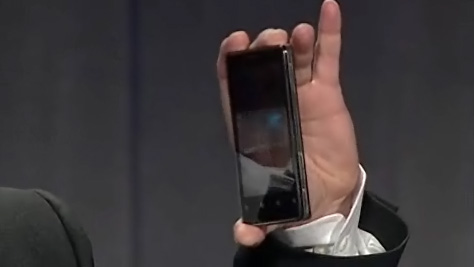
A big part of the architecture group’s discussion focused on Atom/SoC. The 32nm Medfield Atom is due this year, so Intel has been laying out their plans for what they’re going to be doing with Medfield. Unsurprisingly, a big push with Medfield is to break into the SoC space in a way that Moorestown could not. Intel never managed any major design wins for smartphones with Moorestown, which is something they want to correct with Medfield. To that extent Intel has been showing off Medfield concept phones to show investors that it’s a viable product and to try to drum up support.

Intel's Medfield Concept Phone

Friday, 13 May 2011

Intel's Silvermont: A New Atom Architecture

Brooke Crothers broke a very important story today - he published the name Silvermont. Atom's first incarnation came to us in 2008 as a Pentium-like dual-issue in-order microprocessor. The CPU core was named Bonnell, after the tallest point in Austin at around 750 feet. Small mountain, small core. Get it?
Bonnell and the original Atom were developed on a 5-year cadence, similar to how Intel ran things prior to the Core 2 revolution (the P6 to Netburst/Pentium 4 move took 5 years). With the original chip out in 2008, five more years would put the next major architecture shift at 2013, which happens to be exactly when the Cnet report mentions Silvermont will be introduced.

When I first met with the Atom design team they mentioned that given the power budget and manufacturing process, the Bonnell design would be in-order. You get a huge performance boost from going to an out-of-order architecture, but with it comes a pretty significant die area and power penalty. I argued that eventually Intel would have to consider taking Atom out of order, but the architects responded that Atom was married to its in-order design for 5 years.
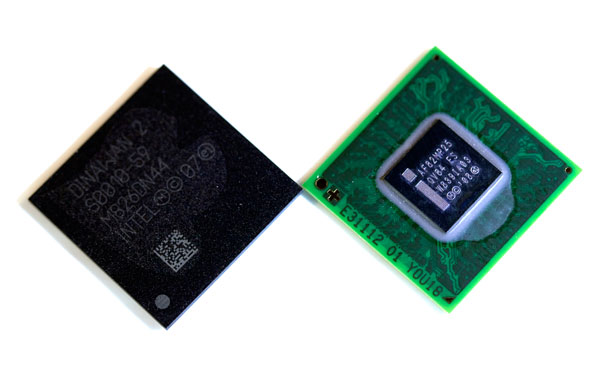
Intel's Moorestown - same Atom core, just more integrated

Since 2008, Atom hasn't had any core architecture changes. Sure Intel integrated the GPU and memory controller, however the CPU still communicates with both of them over an aging FSB. The CPU itself remains mostly unchanged from what we first saw in 2008. Even Intel's 32nm Atom due out by the end of this year doesn't change its architecture, this is the same dual-issue in-order core that we've been covering since day 1. The 32nm version just runs a bit quicker and is paired with a beefier GPU.
Silvermont however changes everything. It is the first new redesign of the Atom architecture and it marks the beginning of Atom being on a tick-tock cadence. Say goodbye to 5 year updates, say hello to a new architecture every 2 years.

Read More - http://www.anandtech.com/show/4333/intels-silvermont-a-new-atom-architecture

Tuesday, 1 February 2011

Intel briefly shows off an Atom SoC powered smartphone


Intel Corp. at its sales conference last week reportedly demonstrated a prototype of a smartphone featuring one of its Atom-based system-on-chip (SoC). The demonstration likely involved an early prototype of a handset running code-named Medfield SoC, which is due to be released later this year.

Anand Chandrasekher, vice president and co-general manager of the Intel architecture group showed off a Medfield-based phone at an Intel sales conference, according to a MeeGo developer who attended the event. The demonstrated smartphone was neither big or small; it was also not clear, which operating system the phone utilized.
Continue Reading...
www.customdesktops.moonfruit.com