Wednesday, 18 May 2011

Nvidia Installs Flagship Graphics Chip onto Tesla Compute Card

Nvidia Corp. on Tuesday introduced its new high-end compute card designed for high-performance scientific computing. The novelty utilizes the company's latest code-named GF110 graphics processing unit, has 512 stream processors and delivers the industry's highest compute performance among specially designed accelerators.

Nvidia Tesla M2090 compute card is based on the code-named GF110 graphics processor clocked at 650/1300MHz that has all the 512 stream processors enabled. The board also has 6GB of GDDR5 memory with ECC clocked at 3.70GHz. Thanks to usage of the more advanced graphics processor for computing, the novelty delivers roughly 665GFLOPS of double precision performance, which is about 30% more horsepower than the predecessor M2070.
 

In the latest version of Amber 11, one of the most widely used applications for simulating behaviors of biomolecules, four Tesla M2090 GPUs coupled with four CPUs delivered record performance of 69 nanoseconds of simulation per day. The fastest AMBER performance recorded on a CPU-only supercomputer is 46 ns/day, according to Nvidia. In addition to AMBER, the Tesla M2090 GPU is well suited to a wide range of GPU-accelerated HPC applications.

Read More Here

Hewlett-Packard Does Not See Value in Thunderbolt - Company.

Hewlett-Packard, the world's largest maker of personal computers, said that it did not see the value in the Thunderbolt interconnection technology recently unveiled by Intel Corp. along with a number of partners. Instead, HP believes that USB 3.0 offers better value at present.
"We did look at [Thunderbolt]. We are still looking into it. Have not found a value proposition yet. On the PC side, everybody seems to be content with the expansion of USB 3.0. Do we need to go into more fancy solutions? Not convinced yet," said Xavier Lauwaert, worldwide marketing manager for desktops at HP, reports IDG News Service.


HP this week introduced a new lineup of high-end desktop personal computers called Pavilion HPE. The new family supports SuperSpeed USB interconnection standard and does not feature Intel Thunderbolt, which is currently supported by select Apple Macintosh personal computers and is also backed by a number of companies, primarily providers of professional solutions.
#

Although Intel has led the design of both Thunderbolt and USB 3.0, the company at present does not support USB 3.0 with its core-logic sets and only supports TB with standalone controllers. Next year the Santa Clara, California-based chipmaker plans to release chipsets with USB 3.0 support, but the destiny of integrated support of TB is not clear at this point. As a result, it is generally not surprising that PC makers are not too enthusiastic about the Thunderbolt.

Read More Here

OCZ's New Firmware Can Improve Performance, Realiability of 20nm-Class NAND Flash Memory

OCZ Technology Group on Monday introduced a new firmware technology for solid-state drives (SSDs) that can allow installation of inexpensive NAND flash memory manufactured using 20nm-class process technology into SSDs that require improved reliability.

Modern multi-level cell (MLC) flash memory that is produced using thin fabrication processors is generally less reliable than similar memory products made using older process technologies. However, manufacturers cannot keep using old manufacturing methods since they need to reduce their production costs. In a bid to maintain reliability, improve performance and lower manufacturing costs, new solid-state drive controllers and firmware technologies are needed.

OCZ Technology unveiled the Arowana Flash Translation Layer (FTL) from Indilinx. The firmware technology supports both existing and upcoming Indilinx controllers and can improve performance and enterprise capabilities and enables SSD suppliers to deploy cost-effective 20nm-class NAND flash memory.
The new Arowana FTL enhances performance of Indilinx controllers with HyperQueuing, which significantly increases sequential write speeds and random IOPS over the previous generation FTL. In addition, Arowana's support of 2xnm flash provides SSD suppliers with the ability to offer end users a more attractive product with lower cost NAND components. The new Arowana FTL also maximizes the life of low endurance flash with INXtend technology.

Read More Here

Intel’s 2011 Investor Meeting - Intel’s Architecture Group: 14nm Airmont Atom In 2014

Today Intel is holding their annual investors meeting at their Santa Clara headquarters. In true Intel fashion it’s being treated as a big event (ed: it’s so big they ran out of lunch), as this is the company’s primary vehicle for addressing the investors holding their 125 billion dollars in shares; in essence it’s a reprise of their current and future technology plans as a pep-talk for investors. As such it’s not really a technical event, but it’s not uncommon for a few new technical details to shake out during the presentations.

There are a number of presentations throughout the day, including keynotes from Paul Otellini, and presentations from a number of Intel groups including the architecture group, the data center group, and the manufacturing group. If something is going to shake out it’s bound to be the architecture group, so this is where we’ll start.

Atom/SoC
A big part of the architecture group’s discussion focused on Atom/SoC. The 32nm Medfield Atom is due this year, so Intel has been laying out their plans for what they’re going to be doing with Medfield. Unsurprisingly, a big push with Medfield is to break into the SoC space in a way that Moorestown could not. Intel never managed any major design wins for smartphones with Moorestown, which is something they want to correct with Medfield. To that extent Intel has been showing off Medfield concept phones to show investors that it’s a viable product and to try to drum up support.

Intel's Medfield Concept Phone

Tuesday, 17 May 2011

Leaked iPhone 5/4S Case Shows New Features

Thanks to case leaks for whiffs of the next iPhone.


Case manufacturers are a great source of leaks about a future product's design. Without showing case makers the device early, a new product won't have the full line of accessories for it.

For one reason or another, people love to encase their smartphones in cases; and if the iPhone 4 is any indication of Apple's design direction, the next iPhone will likely find homes in many different cases.
A leaked case design out of China, as shown by Gadgets DNA, suggests that the next iPhone will have a bigger edge-to-edge screen design that could means a bigger LCD in the current iPhone 4's form factor.

Another new design feature is a second cut out hole on the back. Some believe it to be a relocation of the camera LED flash in an effort to improve low-light performance.

Read More - http://www.tomsguide.com/us/iphone-4s-iphone-5-case-leak,news-11207.html

NVIDIA's GeForce GTX 560: The Top To Bottom Factory Overclock

NVIDIA’s GF104 and GF114 GPUs have been a solid success for the company so far. 10 months after GF104 launched the GTX 460 series, NVIDIA has slowly been supplementing and replacing their former $200 king. In January we saw the launch of the GF114 based GTX 560 Ti, which gave us our first look at what a fully enabled GF1x4 GPU could do. However the GTX 560 Ti was positioned above the GTX 460 series in both performance and price, so it was more an addition to their lineup than a replacement for GTX 460.

With each GF11x GPU effectively being a half-step above its GF10x predecessor, NVIDIA’s replacement strategy has been to split a 400 series card’s original market between two GF11x GPUs. For the GTX 460, on the low-end this was partially split off into the GTX 550 Ti, which came fairly close to the GTX 460 768MB’s performance. The GTX 460 1GB has remained in place however, and today NVIDIA is finally starting to change that with the GeForce GTX 560. Based upon the same GF114 GPU as the GTX 560 Ti, the GTX 560 will be the GTX 460 1GB’s eventual high-end successor and NVIDIA’s new $200 card.

GTX 570 GTX 560 Ti GTX 560 GTX 460 1GB
Stream Processors 480 384 336 336
Texture Address / Filtering 60/60 64/64 56/56 56/56
ROPs 40 32 32 32
Core Clock 732MHz 822MHz >=810MHz 675MHz
Shader Clock 1464MHz 1644MHz >=1620MHz 1350MHz
Memory Clock 950MHz (3800MHz data rate) GDDR5 1002Mhz (4008MHz data rate) GDDR5 >=1001Mhz (4004MHz data rate) GDDR5 900Mhz (3.6GHz data rate) GDDR5
Memory Bus Width 320-bit 256-bit 256-bit 256-bit
Frame Buffer 1.25GB 1GB 1GB 1GB
FP64 1/8 FP32 1/12 FP32 1/12 FP32 1/12 FP32
Transistor Count 3B 1.95B 1.95B 1.95B
Manufacturing Process TSMC 40nm TSMC 40nm TSMC 40nm TSMC 40nm
Price Point $329 ~$239 ~$199 ~$160

The GTX 560 is basically a higher clocked version of the GTX 460 1GB. The GTX 460 used a cut-down configuration of the GF104, and GTX 560 will be doing the same with GF114. As a result both cards have the same 336 SPs, 7 SMs, 32 ROPs, 512KB of L2 cache, and 1GB of GDDR5 on a 256-bit memory bus. In terms of performance the deciding factor between the two will be the clockspeed, and in terms of power consumption the main factors will be a combination of clockspeed, voltage, and GF114’s transistor leakage improvements over GF104. All told, NVIDIA’s base configuration for a GTX 560 puts the card at 810MHz for the core clock and 4004MHz (data rate) for the memory clock, which compared to the reference GTX 460 1GB is 135MHz (20%) faster for the core clock and 404MHz (11%) faster for the memory clock. NVIDIA puts the TDP at 150W, which is 10W under the GTX 460 1GB.


Read More - http://www.anandtech.com/show/4344/nvidias-geforce-gtx-560-top-to-bottom-overclock

Corsair TX750 V2: New and Improved

Introduction, Package Contents, and Specifications

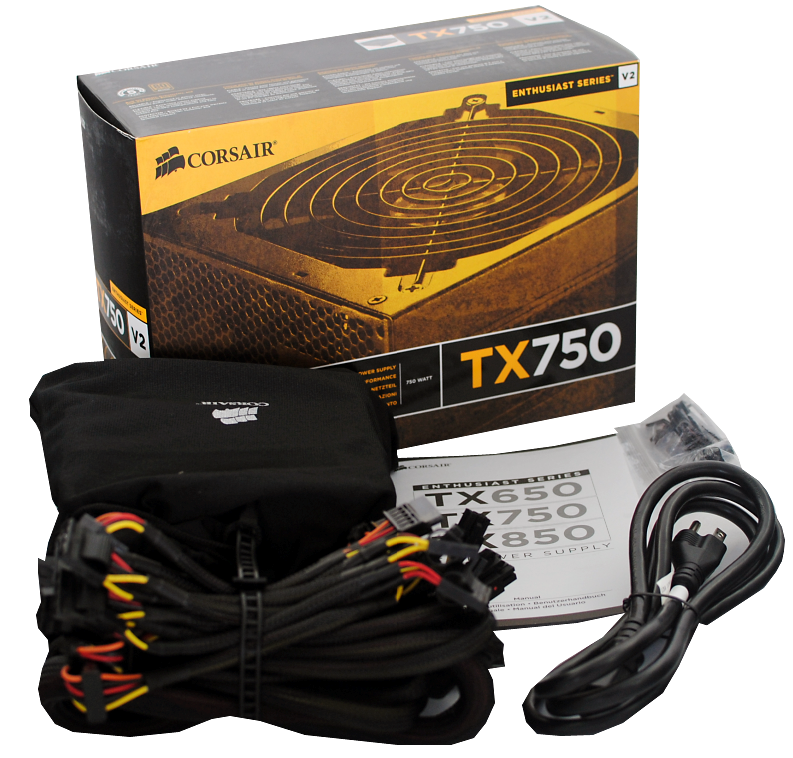
Today we continue with the second part of our series of 750W power supplies. The Corsair TX V2 is the second 80 Plus Bronze certified PSU with non-modular cables that we're looking at for this range. Corsair might be a leading manufacturer of RAM modules and SSDs, but power supply quality depends largely on the ODM and their design. The big question of the PSU source is easy to answer. Seasonic is the company behind many Corsair products—and they're definitely a good choice, much better than using CWT like the original TX750—but what about the internal design and components?
Corsair's TX V2 750W includes a power cord for the American power grid, four screws, one Corsair sticker (for your case), and a manual. The latter is more like a warranty agreement than a helping hand. There is an installation guide, but the warranty part shows some interesting limitations. "[Corsair] shall not be liable for any special, incidental, indirect or consequential damages [...] including [...] loss of profits, revenue, or data." So the 5-year warranty won't help you, other than getting a new PSU should the TX750 go belly up. Don't worry, though; these are common terms and are present with nearly every PSU.

Read More - http://www.anandtech.com/show/4311/corsair-tx750-v2-new-and-improved

Lenovo X1 Announced Alongside An Edge Infused All-In-One

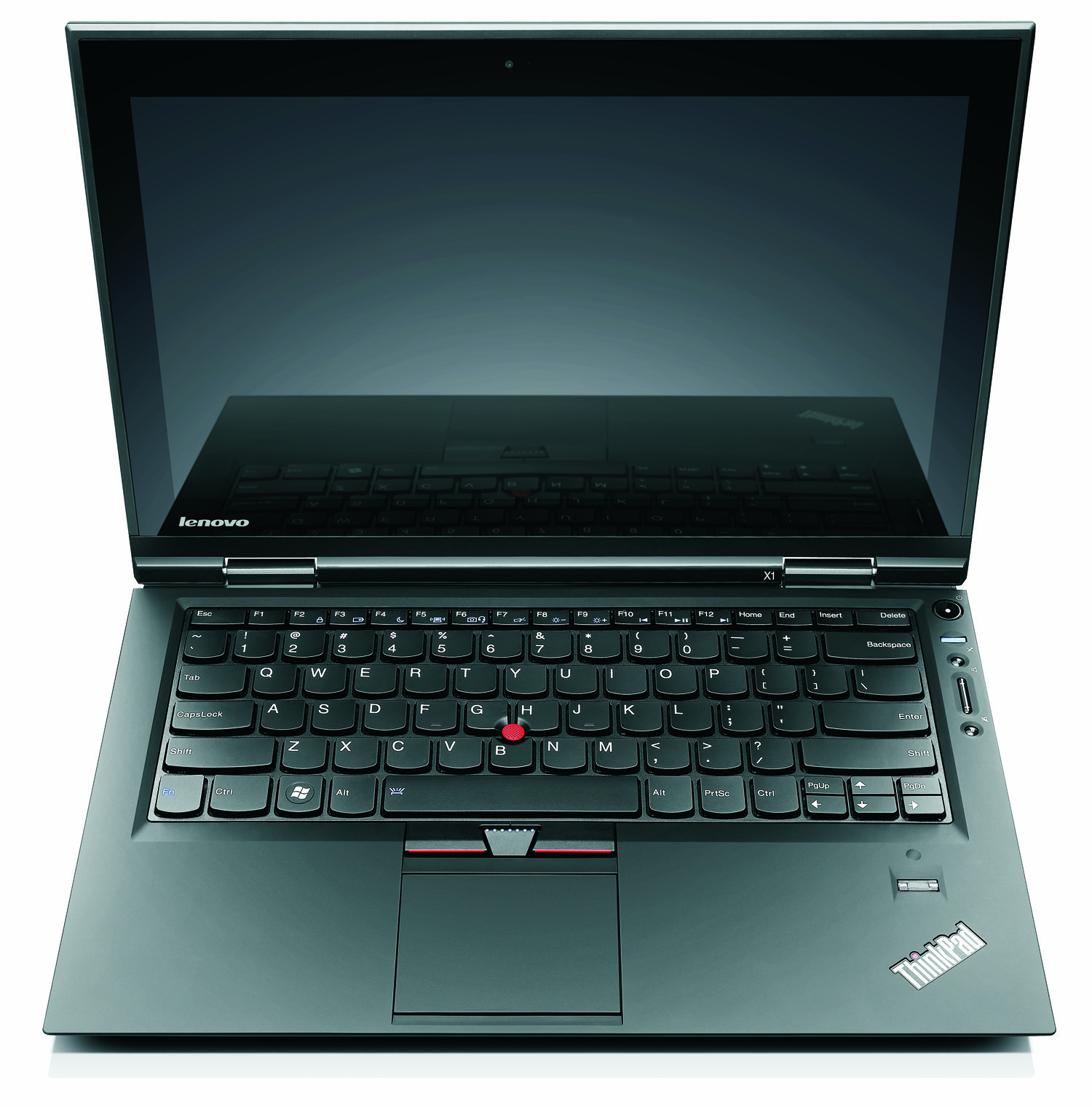
Today Lenovo brings thin and Sandy Bridge to your desks and your laps. Leaked last month, the Lenovo ThinkPad X1 will make a strong case for itself to corporate road warriors while also packing some features that might appeal to consumers. Lenovo also has the newly revealed ThinkCentre Edge 91z, which introduces the Edge aesthetic to the ThinkCentre all-in-one (AIO) line. The ThinkCentre's space-saving form factor and mix of desktop and mobile components should appeal to the IT at home users, and makes a nice addition to your desk. As review units roll in we will see just how well these measure up against their competition.

We'll start with a look at the Lenovo ThinkPad X1, which we saw leaks of recently. Leaks or no leaks, this ultraportable notebook turns out to pack some suprises in its svelte frame. Measuring 16.5mm at its thinnest (the front edge) and 21.5mm at its thickest (the back edge) the X1 will not compete for thinnest laptop on the market, but it may just be the thinnest with a full voltage Sandy Bridge mobile processor. The 13.3" screen is optimized for travelers with a pane of Corning's Gorilla Glass covering its TN-panel (we confirmed this with Lenovo Product Manager Jason Parrish) and peaking at a reported 350 nits at a resolution of 1366x768. We'll reserve judgment on the panel till we get our hands on it; truth is, in a market bereft of IPS displays, even a 768p TN-panel can land near the top of our display charts. In a move that many of you have been asking for on Apple's MacBook Pro line, Lenovo provides both mini-DisplayPort and HDMI for connectivity along with Intel's Wireless Display technology.

Monday, 16 May 2011

Sony Restores PSN Services Around the World

The drought is over.
Sony Saturday began its phased reintroduction of the PlayStation Network and Qriocity services. The progression comes roughly one week after Sony missed its own projected deadline for the PSN restart. Since things kicked off during the weekend, Sony has restored PSN and Qriocity services to all of the United States and Canada.


Kazuo Hirai - PSN Relaunch Announcement


Included as part of the restart is a mandatory software update that forces users to change their account passwords. This update was actually made available on Saturday, prior to the restoration, but Sony recommended people update in preparation for PSN being back online

Read More - http://www.tomsguide.com/us/PSN-Qriocity-Back-Online-Password-Reset-PSN-Update,news-11205.html

Vodafone Reveals Own-brand £80 Smartphone

Vodafone has launched a cheap and cheerful Android smartphone for users that don’t want to sign a contract but can’t afford to fork out an arm and a leg for an off-contract smartphone.

It’s fairly easy to get an off-contract smartphone. All you need is roughly £300-£400. However, a lot of people don’t have £400 to splash on phones, and, as a result, they’re often forced to sign lengthy contracts if they want a fancy smartphone with all the bells and whistles. However, Vodafone’s now got a cheap alternative for those in the market for a smartphone and on a budget.

Read More - http://www.tomshardware.co.uk/Vodafone-Android-Smart-Smart-858-858-Release-Date,news-35593.html